

Rice cookers have become an essential appliance in modern kitchens. From simple white rice to complex dishes like sushi rice, brown rice, or even steamed vegetables, a good rice cooker can simplify cooking while delivering consistent results.
However, with so many options available today—traditional models, digital rice cookers, and multifunction smart cookers—choosing the right one can be challenging.
In this guide, we’ll walk you through the key factors you should consider when selecting the best rice cooker for your kitchen.

1. Understand the Different Types of Rice Cookers
Before choosing a rice cooker, it’s important to understand the main types available on the market.
Traditional Rice Cookers
Traditional rice cookers use a basic heating element and a simple thermostat. Once the water evaporates, the cooker switches from “cook” to “warm.”
Advantages include:
- Affordable price
- Simple operation
- Reliable for basic white rice
However, they often lack advanced cooking functions.
For a comparison of traditional and digital models, read our guide: Digital vs Traditional Rice Cookers: What’s the Real Difference?
Digital Rice Cookers
Digital rice cookers include microprocessor control systems that automatically adjust temperature and cooking time.
Benefits include:
- Multiple cooking modes
- Better texture control
- More consistent results
Many modern kitchens now prefer smart digital rice cookers for their convenience and versatility.
Explore our latest Smart Rice Cooker Collection to see advanced models designed for modern households.
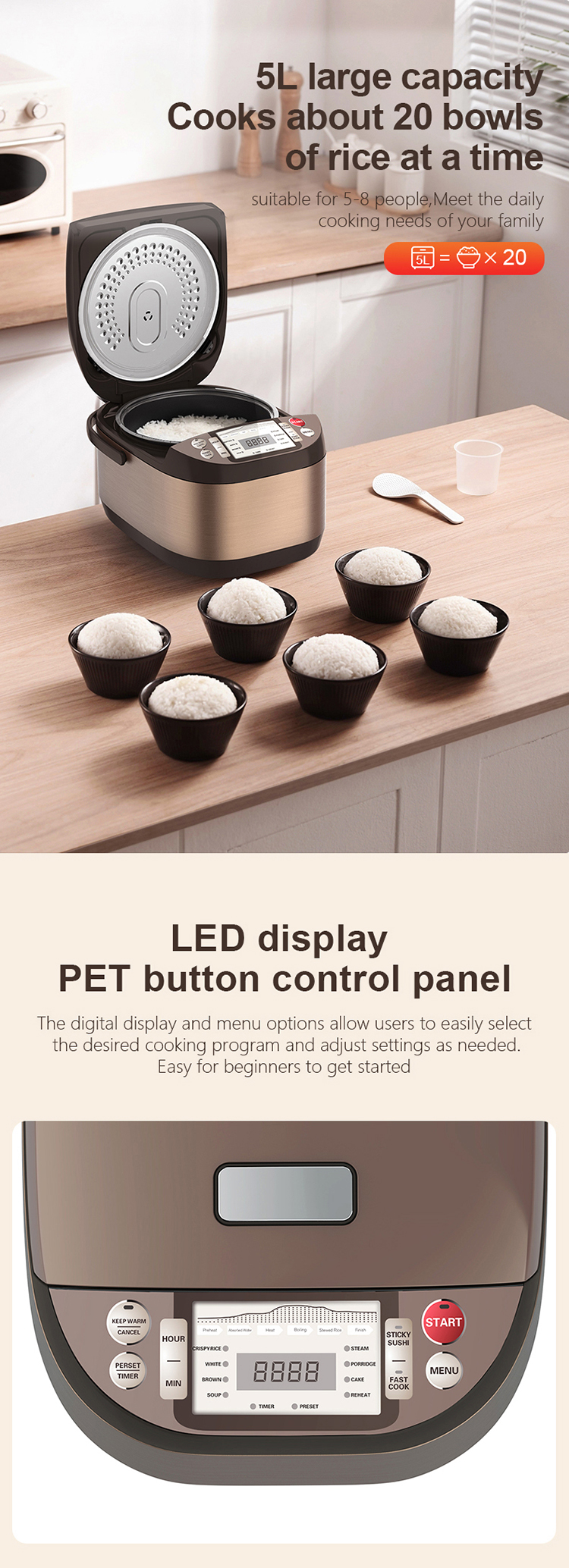
2. Choose the Right Capacity
Rice cookers come in different sizes, typically measured in liters or cups.
Choosing the right capacity depends on your household size.
Small households (1–2 people)
Recommended size:
- 0.6L – 1L
- 3 cup rice cooker
Perfect for:
- Apartments
- Singles
- Couples
Medium households (3–4 people)
Recommended size:
- 1.5L – 2L
- 5–8 cup rice cooker
This is the most popular capacity for families.
Large families
Recommended size:
- 3L or larger
- 10–12 cup capacity
These models are often used in:
- Large households
- Small restaurants
- Catering kitchens
If you're unsure which size fits your needs, read our guide: Choosing the Right Digital Rice Cooker for Your Kitchen
3. Check the Inner Pot Quality
The inner pot is one of the most important components of a rice cooker.
High-quality inner pots improve:
- Heat distribution
- Cooking consistency
- Durability
Common materials include:
Non-stick coated pot
Advantages:
- Easy to clean
- Prevents rice sticking
- Affordable
Stainless steel inner pot
Benefits include:
- Long lifespan
- Scratch resistance
- Health-safe material
Multi-layer thick pot
Premium rice cookers often use multi-layer thermal pots that improve heat retention and cooking performance.
Many modern smart rice cookers feature thick non-stick inner pots for better cooking results.
4. Look for Smart Cooking Functions
Modern rice cookers offer far more than just cooking rice.
Advanced digital models include multiple cooking modes.
Common functions include:
- White rice
- Brown rice
- Sushi rice
- Porridge
- Soup
- Steam vegetables
- Slow cooking
Some models even include cake baking modes.
If you enjoy cooking different dishes, a multi-function digital rice cooker is a better investment.
You can also explore our Multi-Function Digital Rice Cooker Series designed for modern kitchens.
5. Consider Ease of Cleaning
Cleaning is an often overlooked factor when buying kitchen appliances.
Look for rice cookers with:
- Removable inner pots
- Non-stick coating
- Detachable steam vents
- Removable lids
These features make daily cleaning much easier.
For busy families, this can save a lot of time.

6. Safety Features Matter
Modern rice cookers include several safety mechanisms to prevent accidents.
Important safety features include:
- Overheat protection
- Dry burn protection
- Automatic shut-off
- Pressure release system (for pressure models)
These features ensure the appliance operates safely during daily use.
7. Energy Efficiency
Energy-efficient appliances are becoming increasingly important for modern households.
Digital rice cookers often use smart temperature control to reduce power consumption.
Benefits include:
- Lower electricity costs
- Better cooking precision
- Eco-friendly performance
Many smart rice cookers now include energy-saving cooking programs.
8. Design and Kitchen Compatibility
While performance matters most, design also plays a role in choosing the right rice cooker.
Modern rice cookers now feature:
- Minimalist designs
- LED displays
- Touch control panels
- Compact body sizes
These designs fit well into modern kitchens and improve overall user experience.
Final Thoughts
Choosing the best rice cooker for your kitchen doesn’t have to be complicated.
By considering the following factors:
- Cooker type
- Capacity
- Inner pot quality
- Cooking functions
- Cleaning convenience
- Safety features
- Energy efficiency
you can find a rice cooker that perfectly suits your cooking habits and family needs.
If you're looking for reliable kitchen appliances designed for international markets, explore our full Rice Cooker Product Collection to discover high-quality digital rice cookers built for performance and durability.
Published Date: March 17, 2026
Author: Michael Zhang, Overseas Marketing Manager at Elecpro Electrical Appliances Sales Co., Ltd.
WhatsApp:+86 17727116830
Email:elecprosales@elecpro.cn
Address:C3 shop, self built C building, Guantang Road, Songxia Industrial Park, Songgang, Shishan Town, Nanhai District, Foshan, Guangdong China
Website:https://www.elecprokitchen.com
Follow Elecpro on social media for product updates and industry insights: