The rotational speed of the spinning head (typically 3,000–5,000 RPM) directly impacts cotton candy fluffiness through three mechanisms:
Centrifugal Force: Higher RPM generates greater centrifugal force, thinning melted sugar into finer strands. For example, at 5,000 RPM, strands measure 10–15 microns , creating airier textures.
Strand Cohesion: Optimal RPM (e.g., 3,600 RPM) balances strand separation and entanglement, preventing dense clumps while maintaining structural integrity.
Heat Distribution: Faster rotation ensures even heat dispersion (149–473°F), reducing uneven melting that causes brittle or soggy textures.
Key thresholds:
Below 2,500 RPM: Coarse, sticky strands (low fluffiness).
3,000–4,000 RPM: Ideal for commercial-grade fluffiness (e.g., Paragon’s 3,450 RPM producing 200 cones/hour).
Above 5,000 RPM: Over-thinning risks strand breakage and reduced yield.
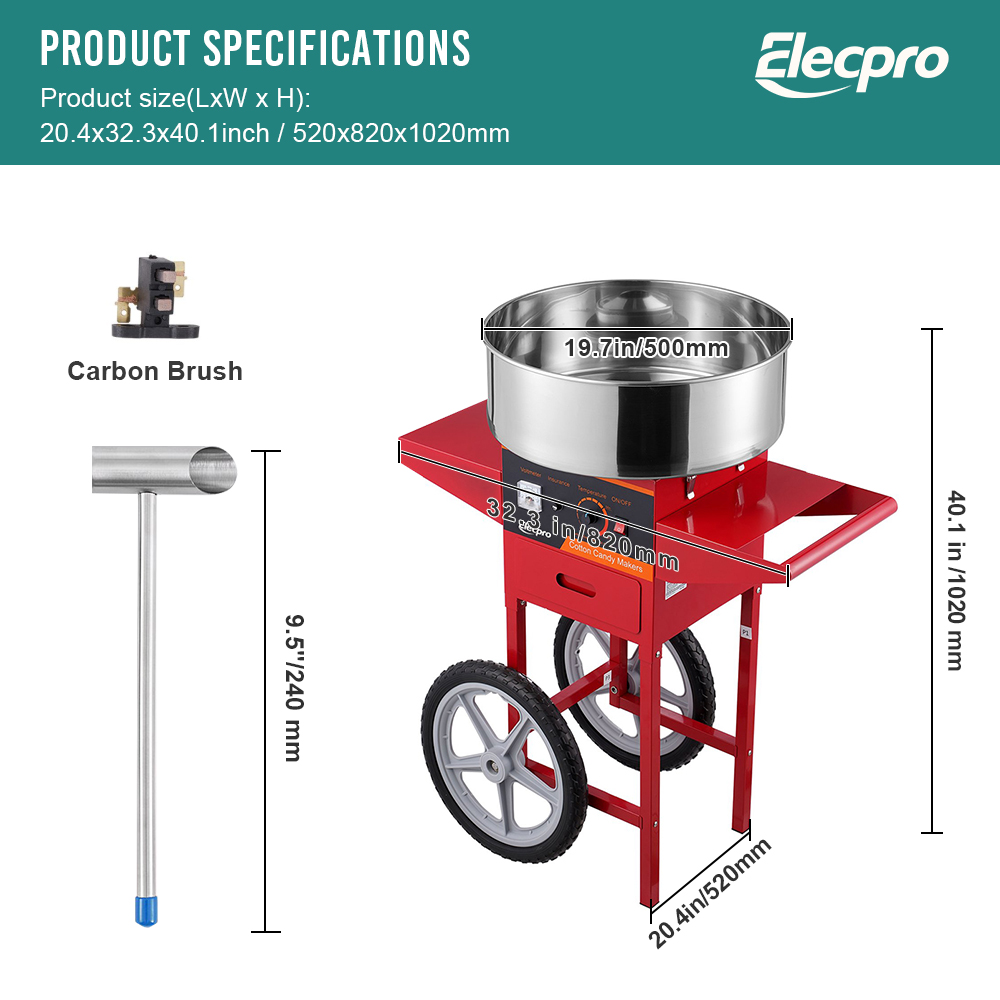
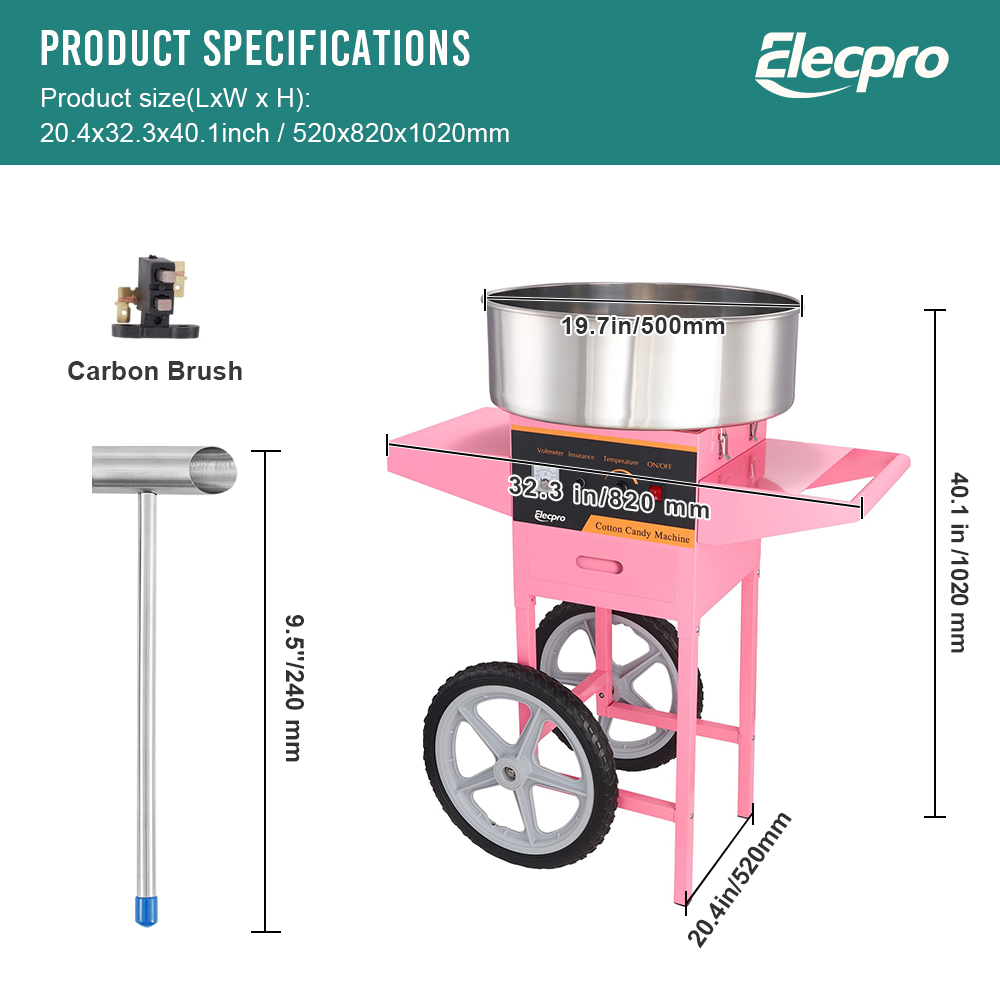
For mobile setups like a cotton candy machine on wheels or Cotton Candy Machine with Cart, balancing RPM (3,200–3,800 RPM) ensures portability without sacrificing fluffiness. When selecting an Electric Cotton Candy Machine or cotton candy maker, prioritize models with adjustable RPM to tailor texture for diverse scenarios—higher speeds for airier carnival-style treats, moderate speeds for home cotton candy machine electric use.